☸️ Kubernetes (K8s) Architecture & Concepts Guide
A concise and structured reference guide explaining the Kubernetes Cluster Architecture, core components, and operational workflow.
📌 Architecture Overview
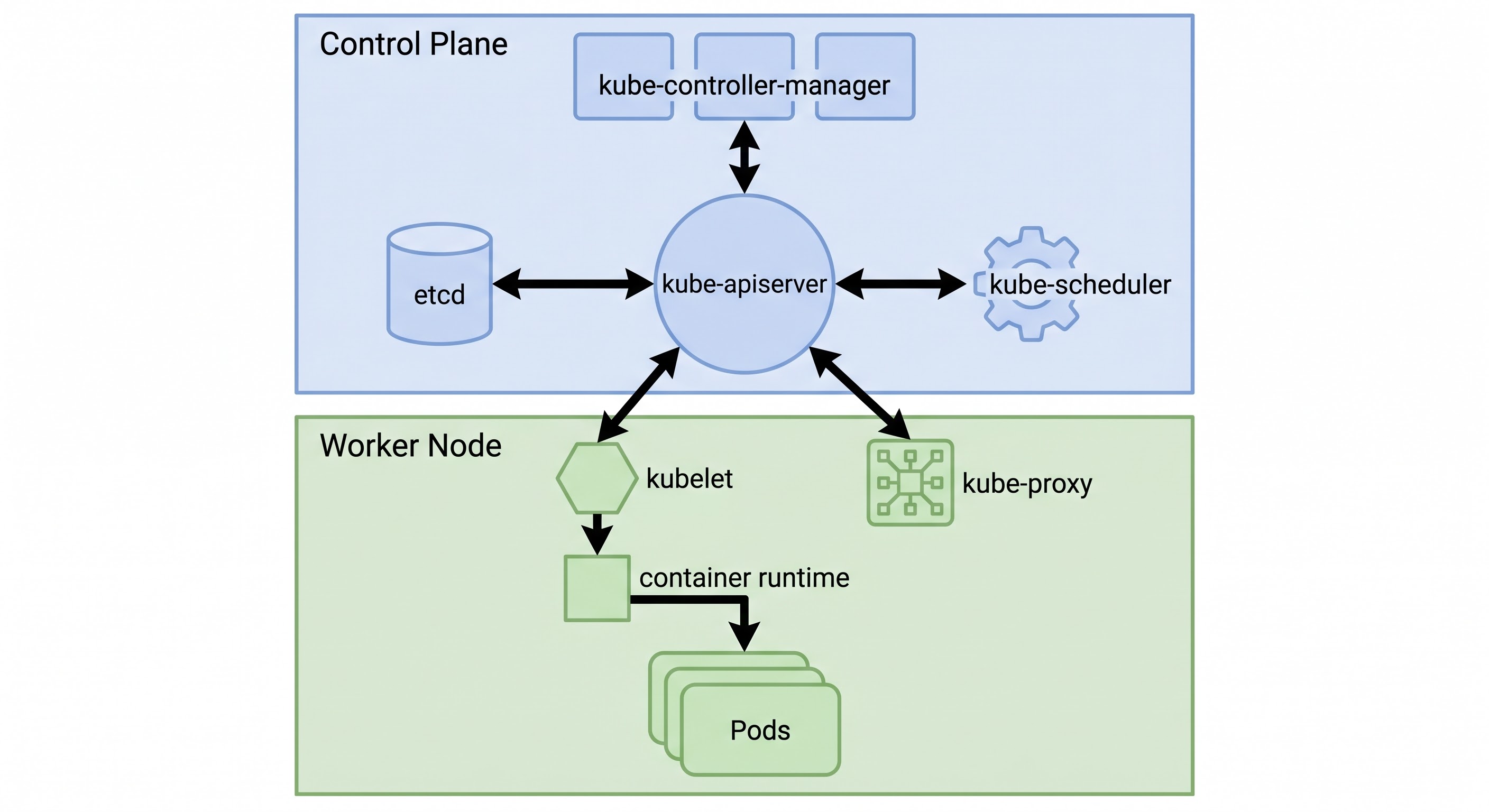
Kubernetes operates on a Master-Worker (Control Plane - Node) model:
- Control Plane (Master Node): The decision-maker. Manages cluster state, scheduling, and overall orchestrations.
- Worker Nodes: The execution unit. Hosts application containers inside Pods and handles networking.
🧠 Control Plane (Master Node)
The Control Plane monitors the cluster and ensures the actual state matches the desired state.
| Component | Description |
|---|---|
kube-apiserver |
The main entryway/gateway for all cluster management (kubectl, REST APIs, Web UI). |
etcd |
A distributed, highly available key-value store holding all cluster data and state configuration. |
kube-scheduler |
Assigns unscheduled Pods to the best available Worker Node based on resource constraints. |
kube-controller-manager |
Runs background controller loops (e.g., Node Controller, ReplicaSet Controller) to maintain cluster health. |
⚙️ Worker Node Components
Worker Nodes carry out instructions from the Control Plane and run actual user applications.
| Component | Description |
|---|---|
kubelet |
The node agent that ensures containers defined in PodSpecs are running and healthy. |
kube-proxy |
The network router on each node that maintains network rules and enables Pod-to-Pod communication. |
| Container Runtime | The underlying software that executes containers (e.g., containerd, CRI-O). |
| Pod | The smallest deployable unit in Kubernetes, containing one or more containers sharing network/storage. |
🔄 Deployment Workflow
  [ User / kubectl ]
          │
          ▼
   [ kube-apiserver ] <─────── Writes/Reads ───────> [ etcd ]
          │
     ┌────┴────────────────────────┬────────────────────────┐
     ▼                             ▼                        ▼
[ kube-scheduler ]    [ kube-controller-manager ]     [ Worker Node ]
(Selects best node)       (Maintains state)                 │
                                                            ▼
                                                        [ kubelet ]
                                                            │
                                                            ▼
                                                 [ Container Runtime ]
                                                            │
                                                            ▼
                                                  [ Running Pods ]
🛠️ Key Objects & Concepts
- Deployment: Defines application updates, scaling, and rollbacks.
- Service: Provides a stable IP address and DNS name to expose Pods internally or externally.
- ConfigMap / Secret: Manages configuration data and sensitive credentials separately from application code.
- Namespace: Virtual clusters used to isolate resources within the same physical cluster.
🚀 Basic Cheat Sheet (kubectl)
# Check cluster information
kubectl cluster-info

# View all running nodes
kubectl get nodes

# Get all running pods in the current namespace
kubectl get pods

# Create a deployment from a manifest
kubectl apply -f deployment.yaml

# Inspect logs of a specific pod
kubectl logs <pod-name>